Pattern Parquetry

Pattern parquetry originated in France in the 16th Century as an alternative to stone and ceramic mosaics. Simply put, pieces are cut into geometric shapes and joined together to make patterns.

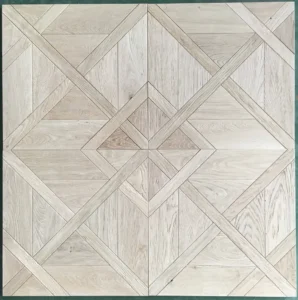
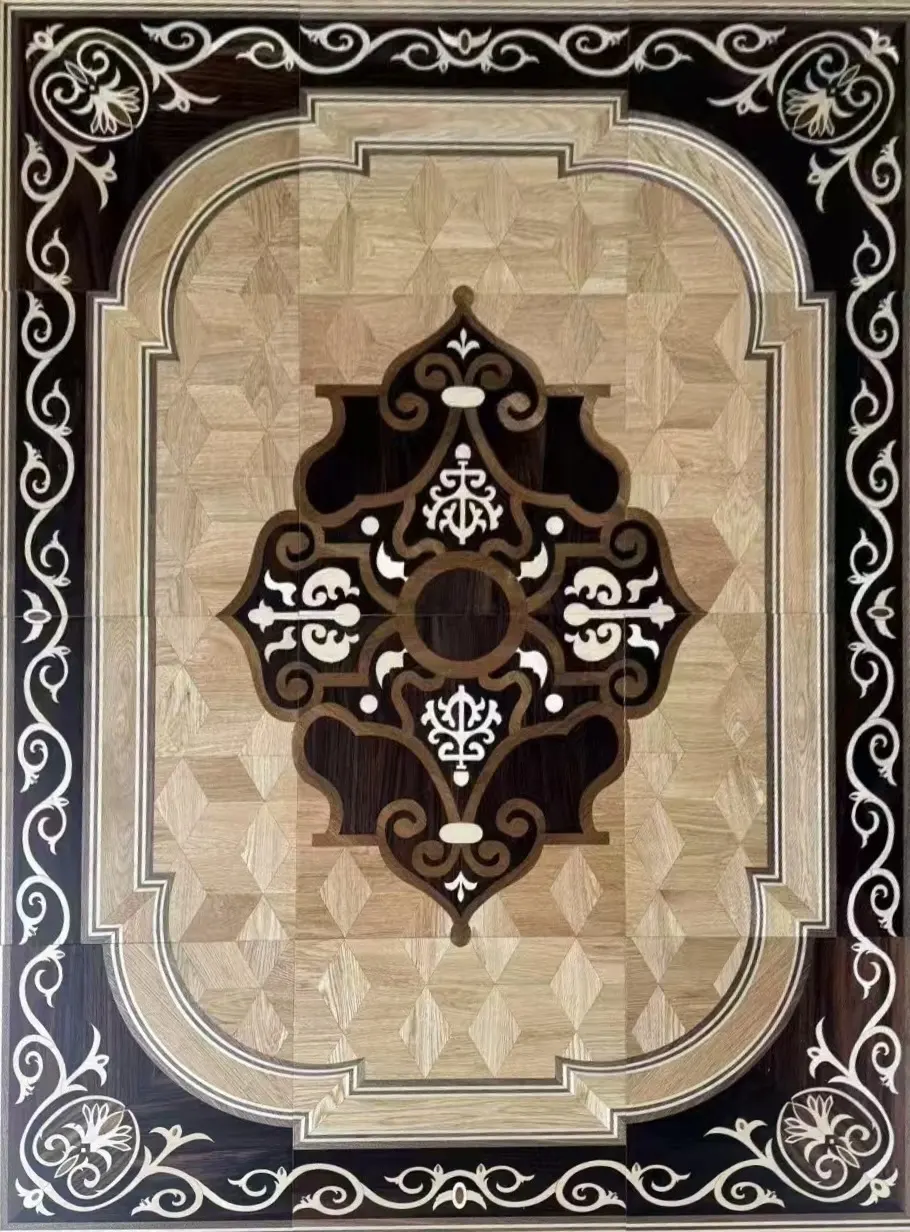
It is, however, related to an older tradition called marquetry, which is an applique technique where very thin wood veneer is applied to a substrate. This goes back and far as ancient Egypt where precious woods were overlaid on common woods to reduce cost when making furniture, something that is still done today. This technique is also currently used to make pattern parquetry. Apart from reducing cost, marquetry allows for the creation of more complex patterns such as this centre piece.

The technique used in any particular case depends on the specific requirements of the project, which may not simply be cost. The complexity of the pattern or to the environment where the floor is to be installed may be the deciding factors. For example, where underfloor heating is to be used, thin veneers may be more appropriate than thicker veneers or solid wood. Ecquality makes its parquetry using both solid wood and engineered wood, including marquetry depending on the requirements of the project.

Our solid wood parquetry and our tongue and groove engineered parquetry are made without glue or hardware connecting the elements. This is a superior technique to butt jointed and glued panels because each element is an individual piece of flooring that can move with ambient moisture conditions, meaning that there is no stress in the panel, a factor which can cause distortion and cracking. For a detailed explanation of how we make this kind of parquetry we have a video that provides a good overview.
Parquetry patterns

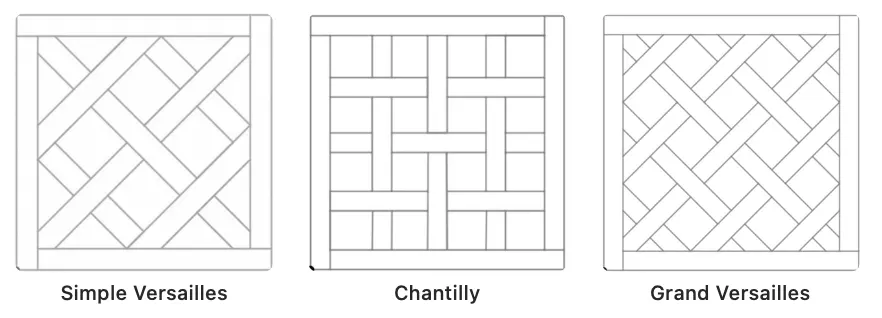
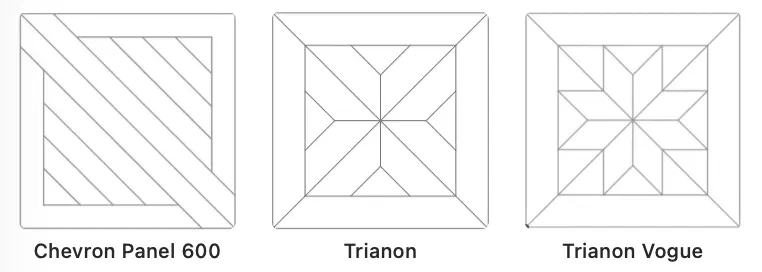
The only limit to the number of parquetry patterns is the imagination. This doesn’t mean that anything that can be imagined can be made, but within technical limitations it does mean that anything is possible. The most popular patterns are the traditional ones, but for projects looking for something unique we would be pleased to work with your designer to develop something unique. Below are some traditional and popular patterns as well as a few creative modern examples.

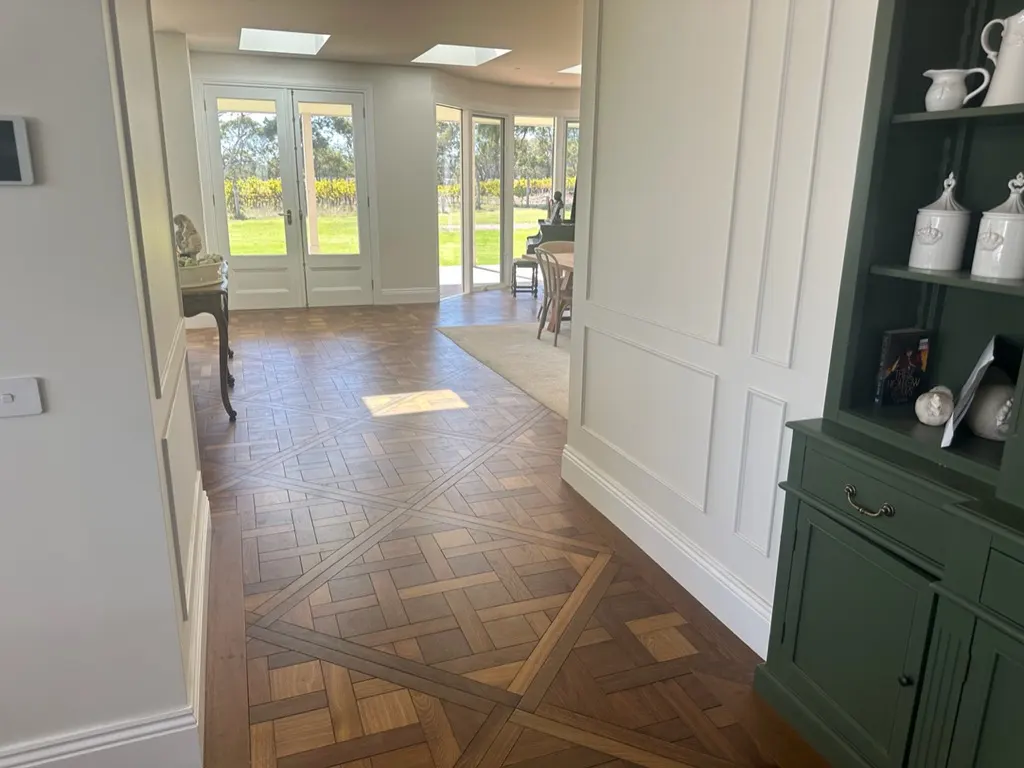
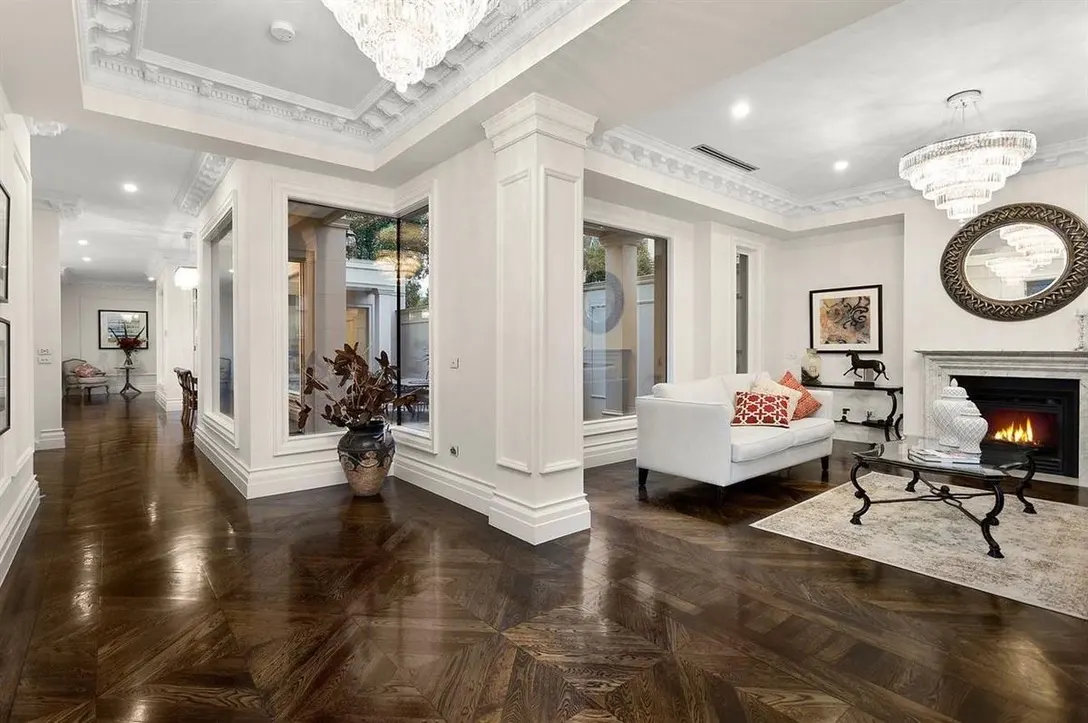
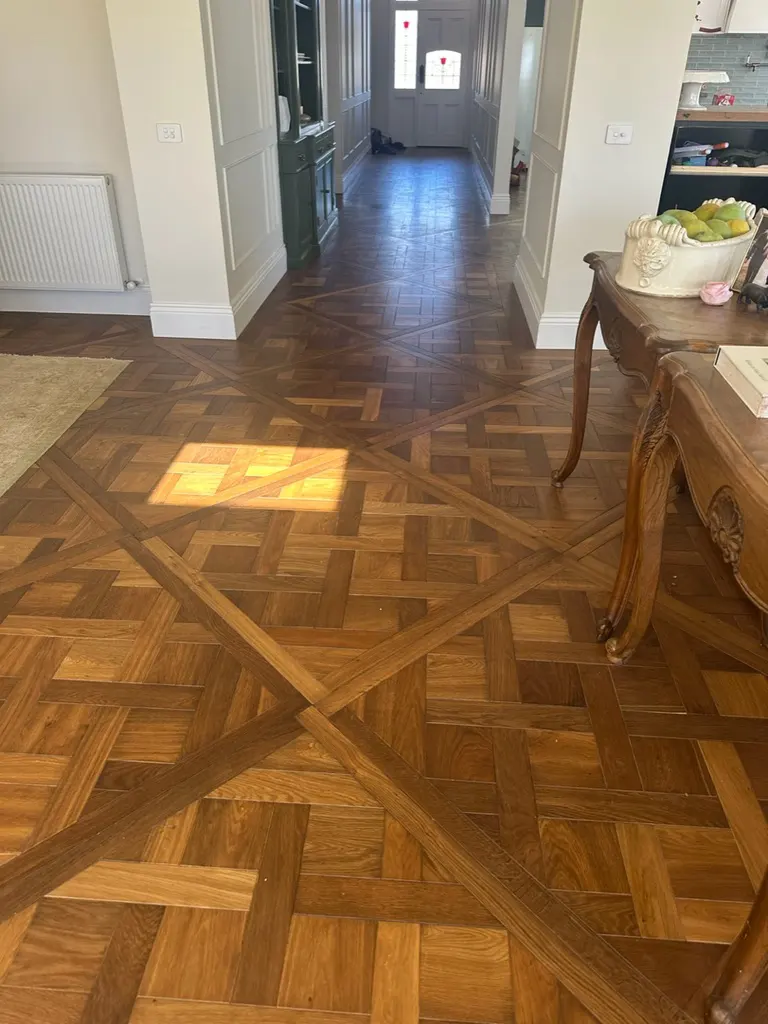
This is a traditional Grande Versailles pattern, but we have modified the size of the border in order that the lines match up when laid. In the original design, the one still used most widely today, the elements are symmetrical within the pattern, but do not line up with the elements in the adjacent panels. Note that the frames are made thinner to bring the internal elements between panels into alignment.

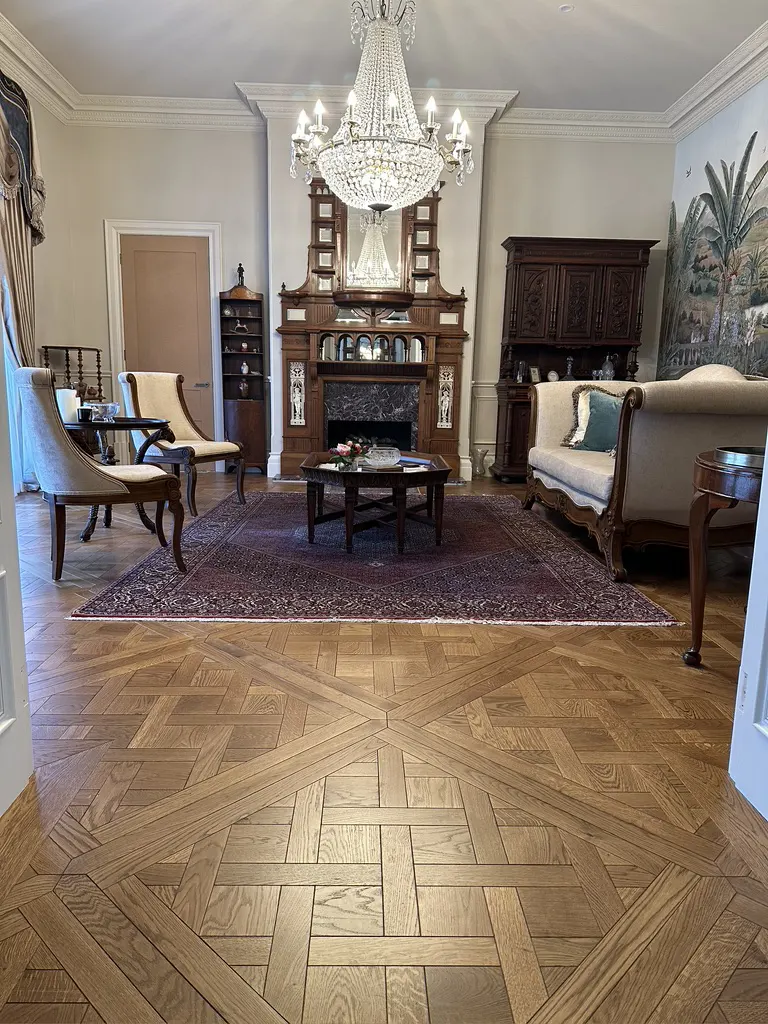
This is also traditional Grande Versailles, but you will note that only the centre crosses align across panels. This project also uses an additional frame or border between the panels that are called shuttle blocks or pickets.

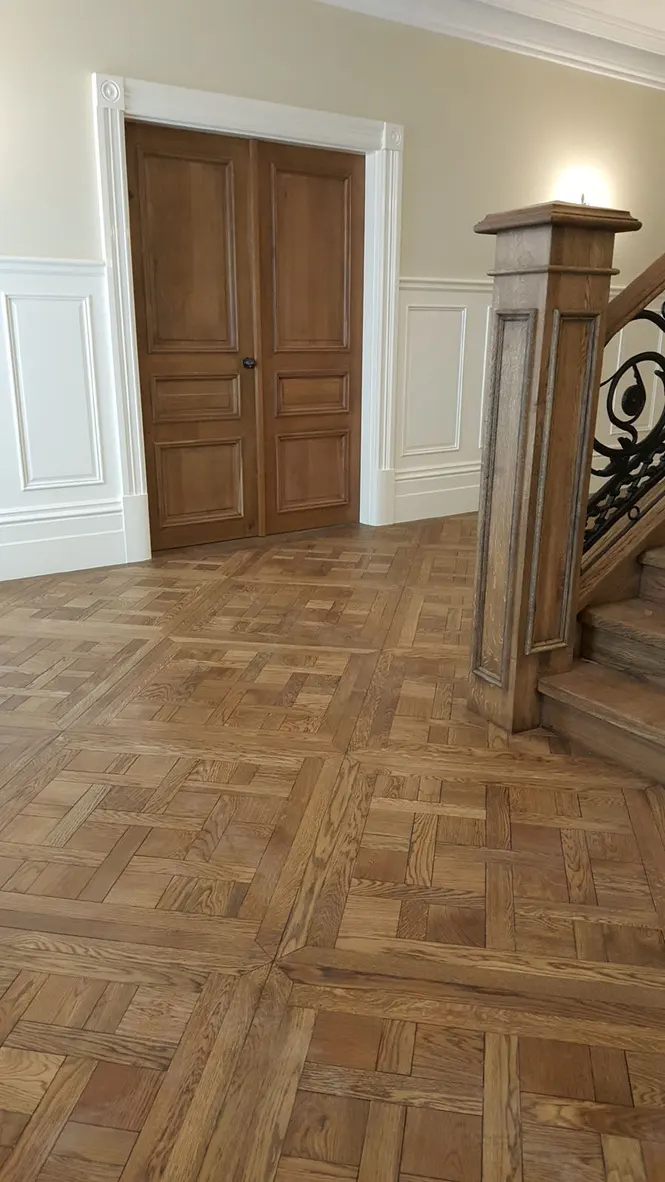
This pattern is called Chantilly, which is similar to Grande Versailles, but the components are vertically aligned within the frame, rather than oblique. They are laid at 45 degrees to the walls, and the effect is further enhanced by the addition of double shuttle blocks between the panels.
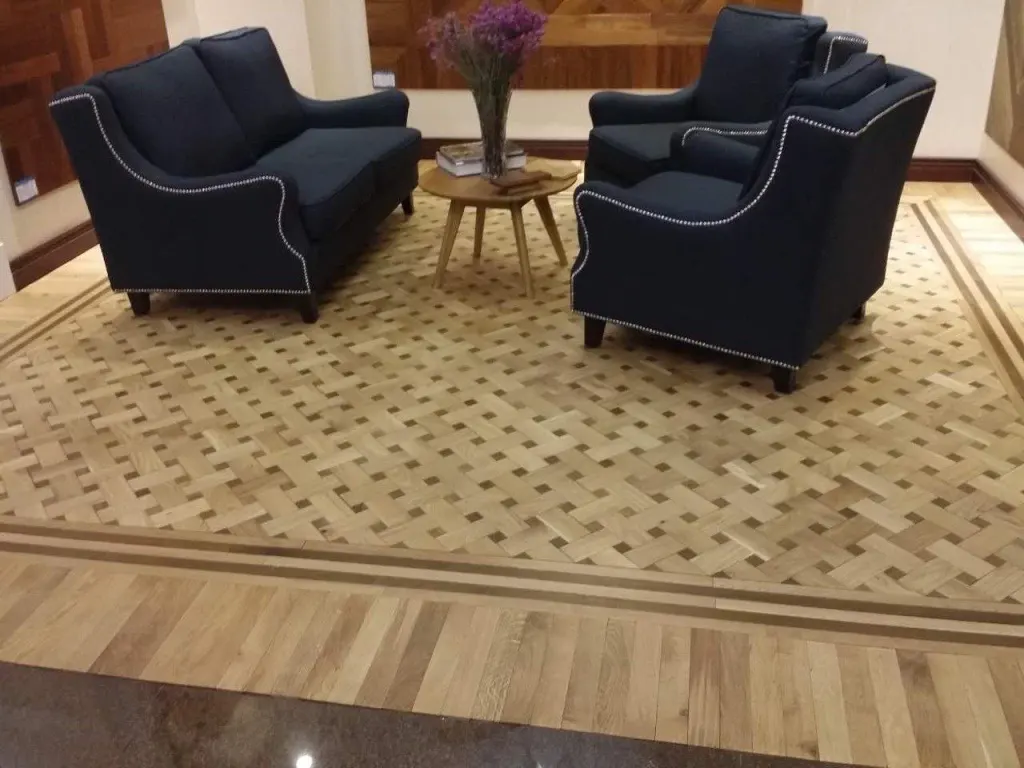
Here we have another traditional pattern, but it is not in the form of a panel in a frame, but rather it is continuous simple basketweave in Oak with Walnut highlights and trim.
This pattern, known as reducing squares, is currently popular.

This is a bespoke design we produced for a casino. It is does not have a traditional name and is an example of what can be done to create a stunning and unique floor.