

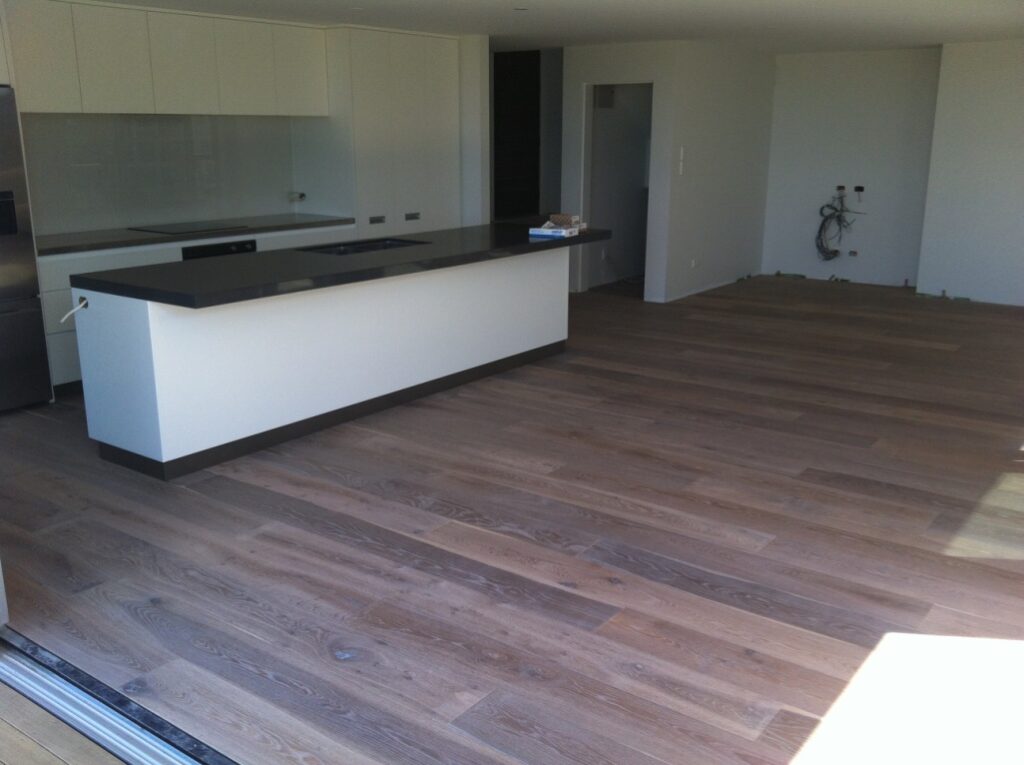
Two ways to darken oak
Dark oak floors are popular, and people often ask me how we get the colour. Many assume it’s a stain. Often it isn’t. Two of the best ways to darken oak don’t add colour at all. They change the wood itself. One is fuming (often called smoking), the other is roasting. Both darken oak, but they work differently and give different results, and it’s worth knowing which one you’re buying.
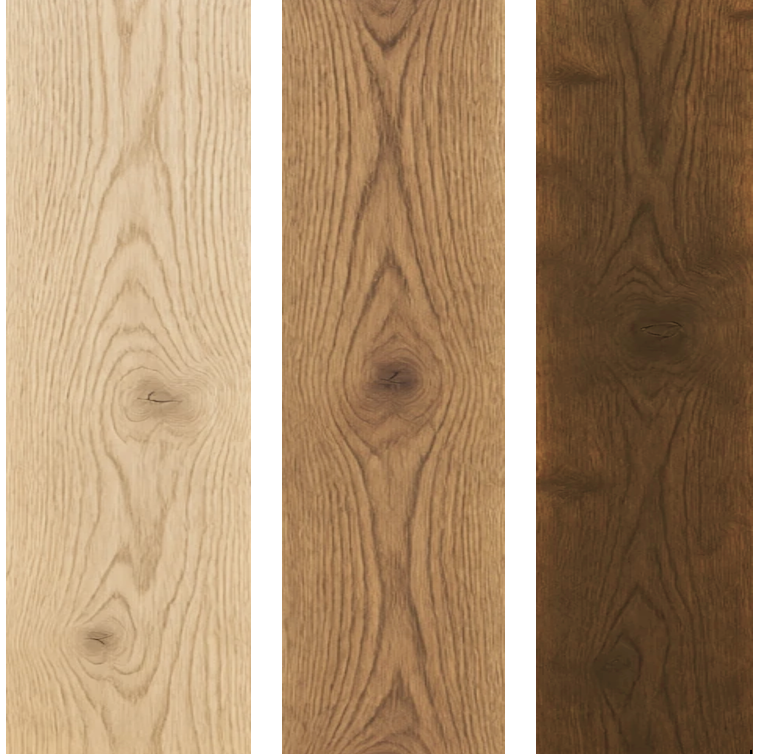
untreated, fumed and roasted oak side by side
Fuming
Fuming is an old technique. The wood is sealed in a chamber with ammonia, and the ammonia reacts with the natural tannins in the oak. No pigment is added, so the grain stays crisp and clear. We fume oak in our own factory.
The colour depends on two things: how long the wood stays in the chamber, and how much tannin each board contains. Time is easy to control. Tannin isn’t. Every board reacts a little differently, some going deep brown and some staying lighter, and sapwood hardly changes at all. We sort the boards after fuming and re-treat the lighter ones, which brings them closer together. But a perfectly even colour is impossible with fuming. To my eye, that variation is part of the beauty of fumed oak: the floor has a depth and life that a stain can’t copy.
One thing to know: the colour doesn’t go very deep. Fuming changes the surface of the wood, so sanding will always change the tone. If a fumed floor is ever sanded back, expect it to come up lighter.
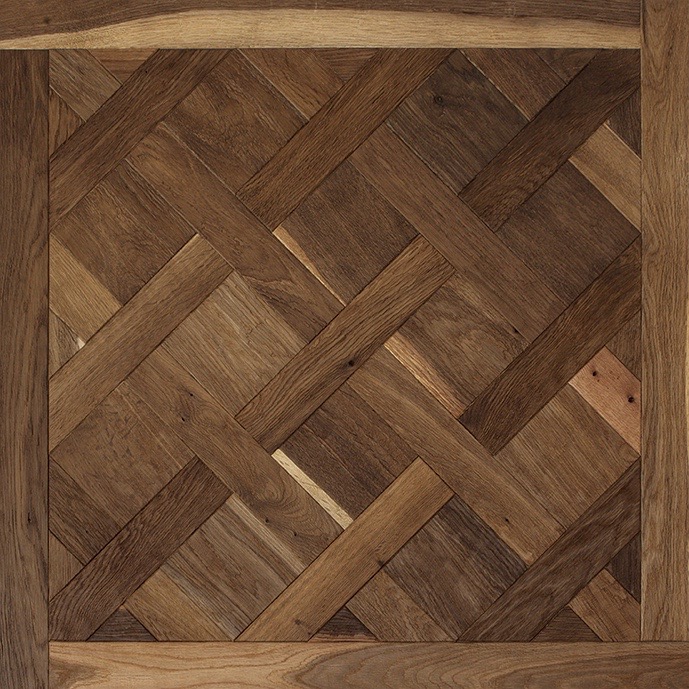
dark fumed oak panel. Note that sapwood remains light. Considerable colour variation.
Roasting
Roasting, also called thermal modification, uses heat instead of chemistry. The wood is heated to around 200°C in a chamber with very little oxygen, so it cooks rather than burns. It’s specialist work, and we use a specialist for it. The colour goes right through the board and ranges from caramel to deep chocolate, depending on the temperature and the time in the chamber.
Roasted oak varies in colour too, and the lighter material can be sorted out and re-treated in the same way. But because the colour doesn’t depend on tannin, a well-run roasting process gives a somewhat more even result than fuming, and sapwood darkens along with heartwood.
Roasting has another advantage: roasted wood absorbs less moisture, so it’s more stable and moves less with changes in humidity. The trade-off is that it becomes more brittle and somewhat weaker. That doesn’t matter much in a well-laid floor, but it needs careful machining, because edges can chip more easily.
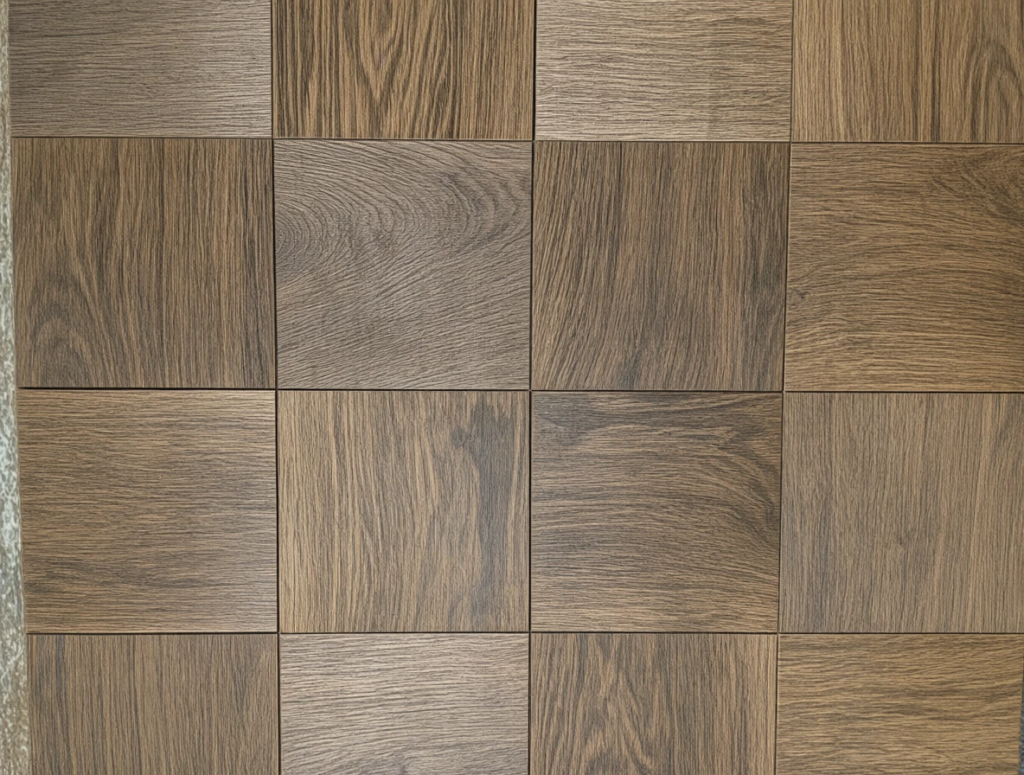
roasted oak
Which should you choose?
It comes down to what you want from the floor.
- Choose fumed oak if you love natural character and variation, and the traditional look of old European floors.
- Choose roasted oak if you want a more consistent colour that goes right through the board, or extra stability in a climate with big swings in humidity.
For my money, fumed oak has more soul. But roasted oak solves real problems, and there are projects where it’s clearly the better choice.
If you’re not sure which suits your project, tell me how you want the floor to look, and we can send samples of both.